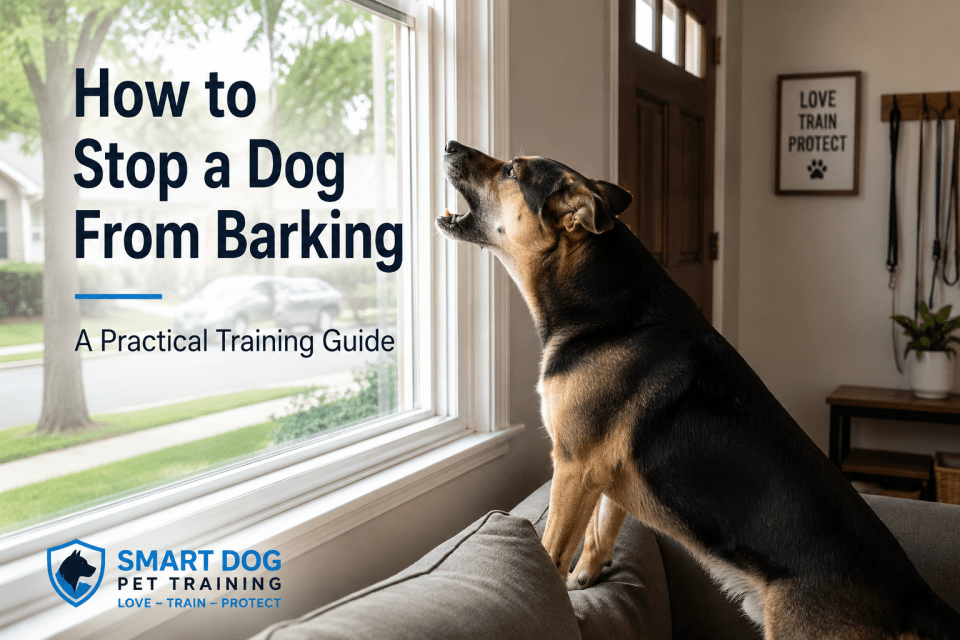
How to Stop a Dog From Barking: A Practical Training Guide
Barking is a normal way for dogs to communicate, but excessive barking can quickly become frustrating for both dogs and their owners. Dogs may bark because of excitement, fear, anxiety, boredom, frustration, territorial behavior, or simply because they have learned that barking gets a response. The key to reducing unwanted barking is understanding why your dog is barking and teaching a calmer, more appropriate behavior instead.
Why Is My Dog Barking So Much?
Before you can effectively reduce excessive barking, you need to understand what is causing it. Two dogs may appear to have the same barking problem while actually barking for completely different reasons. One dog may bark because of fear or anxiety, while another may be excited, frustrated, territorial, bored, or simply seeking attention. Identifying the trigger and the reason behind the barking is the first step toward choosing the right training approach.
Alert or Territorial Barking.
Many dogs naturally bark when they see or hear people, other dogs, delivery drivers, vehicles, wildlife, or unfamiliar activity around their home. A few alert barks can be normal, but the behavior becomes a problem when your dog continues barking, becomes increasingly excited, or cannot disengage from the trigger. The goal is not to eliminate your dog’s natural awareness, but to teach them that after alerting you, they can move away from the trigger, respond to you, and settle calmly.
Attention-Seeking Barking
Dogs quickly learn which behaviors get a response from their owners. If barking regularly results in being talked to, touched, played with, fed, let outside, or given attention, your dog may learn that barking is an effective way to get what they want. Even yelling or repeatedly saying “quiet” can unintentionally reward the behavior because your dog succeeded in getting a response. The goal is to avoid rewarding demanding barking while teaching and reinforcing calmer ways for your dog to ask for attention.
Boredom and Lack of Activity
Dogs need appropriate physical exercise, mental stimulation, social interaction, and opportunities to engage in natural behaviors. When those needs are not being met, some dogs may bark simply because they are bored, restless, or looking for something to do. Regular walks, training sessions, interactive play, enrichment activities, and appropriate chew toys can help provide healthy outlets for your dog’s energy. In some cases, increasing meaningful daily activity can significantly reduce excessive barking without directly correcting the barking itself.
Fear and Anxiety
Some dogs bark because they are frightened, uncomfortable, or anxious about something in their environment. You may also notice behaviors such as backing away, pacing, hiding, trembling, growling, lunging, or remaining intensely focused on the trigger. In these situations, the barking is often a symptom of the dog’s emotional response rather than simply unwanted behavior. Punishing the barking without addressing the underlying fear or anxiety may make the problem worse. Training should focus on helping the dog feel safer, creating appropriate distance from triggers, and gradually teaching calmer responses.
Frustration
Dogs may bark when they can see or hear something they want to reach but are prevented from getting to it. This commonly happens behind windows, fences, doors, baby gates, inside crates, or while walking on a leash. As frustration increases, barking may become more intense and can sometimes develop into pulling, lunging, or other reactive behaviors. Training should focus on creating enough distance from the trigger for your dog to remain responsive, rewarding calm behavior, and teaching your dog to disengage and focus on you instead.
Reactivity
Some dogs bark intensely when they encounter other dogs, unfamiliar people, bicycles, vehicles, wildlife, or other environmental triggers. Reactive barking can be caused by fear, frustration, overexcitement, or a combination of these emotions and may also include pulling, lunging, growling, or difficulty responding to the owner. Rather than simply trying to stop the barking, training should focus on identifying the trigger, creating an appropriate amount of distance, helping the dog remain below their reaction threshold, and gradually teaching a calmer response.
How to Stop Excessive Barking
Once you have a better understanding of why your dog is barking, you can begin working on changing the behavior. Successful barking training is not simply about stopping the sound—it is about teaching your dog a more appropriate response to the situation that causes the barking. The following steps can help reduce excessive barking while building better communication, focus, and self-control.
Step 1: Identify the Trigger
Pay close attention to what happens immediately before your dog begins barking. Is your dog reacting to another dog, a person walking past the house, a delivery driver, a sound outside, being left alone, or wanting your attention? Also consider what happens immediately after the barking and how you respond. Identifying these patterns can help you understand what is triggering the behavior and whether your response may be unintentionally reinforcing it. Once you know when and why the barking occurs, you can begin developing a more effective training strategy.
Step 2: Manage the Environment
Good training also means preventing your dog from repeatedly practicing unwanted barking. If your dog spends the day barking through a front window at people or dogs passing by, for example, temporarily limiting access to that window can reduce opportunities to rehearse the behavior. Closing blinds, using visual barriers, creating more distance from triggers, changing the location of a crate or resting area, or using background sound to reduce outside noises can all help. Environmental management does not replace training—it creates better conditions for your dog to learn and practice calmer behavior.
Step 3: Teach an Alternative Behavior
Instead of focusing only on stopping the barking, teach your dog what you would like them to do instead. Useful alternative behaviors may include coming when called, sitting, going to a designated place, looking at you, or settling calmly. For example, when your dog notices someone walking past the house, you can teach them to move away from the window, come to you, and settle in a designated area. With consistent practice and reinforcement, your dog can learn that responding calmly to a trigger is more rewarding than continuing to bark.
Step 4: Reward Quiet Behavior
Dogs often receive the most attention when they are doing something we do not want, while calm and quiet behavior goes unnoticed. Make a point of recognizing and rewarding your dog when they notice a normal trigger and remain quiet, disengage from it, or settle when asked. Rewards can include praise, treats, play, or another activity your dog enjoys. By consistently reinforcing the behavior you want, you help your dog learn that remaining calm and responding to you is more rewarding than excessive barking.
Step 5: Practice Before the Situation Becomes Difficult
Training is most effective when your dog is calm enough to think, respond, and learn. If your dog is already barking intensely, lunging, pulling, or completely focused on a trigger, it may be difficult for them to respond to you. Begin training at a distance or level of distraction where your dog can notice the trigger while still remaining responsive. As your dog becomes more successful, gradually increase the difficulty while continuing to reinforce calm behavior. This helps your dog build the skills needed to make better choices when faced with more challenging situations.
What NOT to Do When Your Dog Barks
How you respond when your dog barks can either help improve the behavior or unintentionally make it stronger. Repeated yelling, punishment, or giving your dog what they want just to make the barking stop may provide temporary relief, but it does not necessarily teach your dog a better response. Understanding what to avoid is an important part of developing a successful barking training plan.
Don’t Constantly Yell “Quiet!”
Repeatedly yelling “quiet” at a barking dog may actually add more excitement to the situation. From your dog’s perspective, your raised voice can sound as though you are joining in rather than asking them to settle. The word “quiet” also has little meaning unless your dog has been specifically taught what you expect them to do when they hear it. Instead of repeatedly raising your voice, calmly redirect your dog away from the trigger, ask for a behavior they already understand, and reinforce them when they become quiet and responsive.
Don’t Punish Fear
If your dog is barking because they are frightened or anxious, punishment can increase their stress and may strengthen the negative association they already have with the trigger. Although punishment might temporarily suppress the barking, it does not necessarily change how your dog feels about the situation. Instead, create enough distance for your dog to feel safer and remain responsive, then gradually work on building confidence and teaching a calmer response to the trigger.
Don’t Accidentally Reward Barking
Sometimes owners unintentionally teach their dogs that barking works. For example, if your dog barks for attention and you respond by petting them, talking to them, giving them a treat, opening a door, or starting a game, the barking may be reinforced. Even if your goal is simply to make the barking stop, your dog may learn that barking produces something they want. Instead, avoid rewarding demanding barking and reinforce calm, quiet behavior so your dog learns a more appropriate way to communicate with you.
Don’t Expect Instant Results
Excessive barking often develops over time, so changing the behavior usually requires patience, consistency, and repeated practice. Rather than expecting the barking to disappear immediately, look for gradual improvements such as fewer barking episodes, shorter periods of barking, faster recovery after a trigger, and a better response to your cues. Small improvements are important signs that your dog is learning. Consistent training and reinforcement will help those calmer responses become more reliable over time.
What About Bark Collars and Other Bark-Control Devices?
Bark collars and other devices designed to interrupt or suppress barking may sometimes stop the sound, but they do not necessarily address why the dog is barking. If a dog is barking because of fear, anxiety, frustration, or reactivity, suppressing the bark does not automatically change the underlying emotional response. Before using any device intended to control barking, first identify the cause of the behavior and consider whether the approach teaches your dog what to do instead. Long-term improvement is more likely when training addresses the reason for the barking while teaching and reinforcing a calmer, more appropriate response.
Barking When Left Alone
Barking that happens primarily when your dog is left alone deserves special attention. Some dogs may bark briefly when their owner leaves and then settle, while others continue barking or howling for extended periods. Watch for additional signs such as pacing, destructive behavior, scratching at doors or windows, excessive panting or drooling, attempts to escape, house-training accidents, or an inability to settle. These behaviors may indicate that the barking is related to distress or separation anxiety rather than simple boredom. In these situations, the goal should be to address the underlying reason your dog is struggling when alone rather than simply trying to stop the barking.
Barking at Other Dogs on Walks
If your dog begins barking when another dog appears during a walk, creating distance is often one of the most important first steps. Try to notice the other dog before your dog becomes highly reactive, then move far enough away that your dog can see the trigger while still responding to you. Reward calm attention, encourage your dog to disengage from the other dog, and avoid forcing close interactions before your dog is ready. As your dog becomes more successful, controlled exposure can gradually occur at closer distances. If the barking also includes intense pulling, lunging, growling, or difficulty recovering after the other dog has passed, professional training may help determine whether the behavior is being driven by fear, frustration, overexcitement, or another underlying cause.
A Simple Daily Barking Training Routine
You do not need to spend hours each day working on your dog’s barking. Short, consistent training sessions can be more effective than waiting until your dog is already reacting to a difficult situation. Spend about 5–10 minutes each day practicing attention to their name, coming when called, moving away from mild distractions, sitting or settling on cue, and calmly observing everyday triggers. Reward your dog for checking in with you, remaining quiet, and recovering calmly after excitement. These simple exercises help build the focus, communication, and self-control your dog needs when more challenging barking situations occur.
- Name Recognition: Say your dog’s name and reward them for calmly looking at you.
- Come When Called: Practice calling your dog away from mild distractions and rewarding a successful response.
- Calm Observation: Allow your dog to notice everyday sights and sounds while rewarding them for remaining quiet and relaxed.
- Sit or Place: Practice having your dog sit or go to a designated place when distractions occur.
- Reward Quiet Behavior: Look for opportunities throughout the day to praise and reward your dog when they are calm and quiet.
- Practice Disengagement: Teach your dog to look away from a trigger and redirect their attention back to you.
- Settle After Excitement: Help your dog practice returning to a relaxed state after play, visitors, walks, or other exciting activities.
When Should You Get Professional Help?
Some barking problems can improve with consistent training and environmental changes at home, while others may require professional guidance. Consider working with a professional dog trainer when the barking is becoming more frequent or intense, is associated with fear or anxiety, includes reactive or aggressive behavior, or is significantly affecting everyday life. A trainer can help identify the likely cause of the barking, observe how your dog responds to specific triggers, and develop a training plan appropriate for your dog and household.
- Barking is becoming progressively worse.
- Your dog is lunging, growling, snapping, or displaying aggressive behavior.
- Barking appears to be associated with significant fear or anxiety.
- Walking your dog has become difficult because of barking or reactivity.
- Barking is creating ongoing problems with neighbors.
- Your dog barks or howls extensively when left alone.
- You have consistently worked on the behavior but are not seeing improvement.
- The barking is interfering with your dog’s or your family’s everyday quality of life.
Excessive Barking Can Improve
Excessive barking can improve when you understand what is causing the behavior and consistently teach your dog a more appropriate response. Instead of focusing only on stopping the barking, ask yourself what your dog is trying to communicate and what you would like them to do instead. With appropriate management, consistent training, reinforcement of calm behavior, and realistic expectations, many dogs can learn to respond more calmly to the situations that once triggered excessive barking. The goal is not a dog that never barks—it is a dog that can communicate appropriately, respond to you, and settle when asked.
Explore More Dog Training Resources
Every dog and every training challenge is different. Visit our Dog Training Library for additional practical guides covering common behavior and training concerns, including leash pulling, jumping, anxiety, reactivity, puppy training, and other everyday challenges. Our resources are designed to help dog owners better understand their dog’s behavior and develop clearer, more consistent training habits.
Dog Training in Salem, Oregon
If your dog’s barking is becoming difficult to manage, Smart Dog Pet Training provides personalized dog training in Salem, Oregon, designed around your dog’s individual behavior and your everyday environment. Our private training approach can address excessive barking along with obedience, reactivity, anxiety, impulse control, leash manners, and other common behavior concerns.
Dog Training in Albany, Oregon
Smart Dog Pet Training also provides personalized dog training in Albany, Oregon, for owners who need help with excessive barking, obedience, leash manners, reactivity, anxiety, impulse control, puppy training, and other behavior concerns. Our private training approach focuses on your individual dog and the real-life situations you encounter at home and in your community.
Need Help With Your Dog’s Barking?
If excessive barking, reactivity, fear, anxiety, or other behavior concerns are becoming difficult to manage, Smart Dog Pet Training can help. Our private dog training is designed around your dog, your home, and the situations you encounter in everyday life. We begin by identifying what may be causing the behavior and then develop practical training strategies you can continue using between sessions to help your dog build calmer, more appropriate responses.